I’ve been working in industrial concrete construction across the Greater Montreal area for over a decade, and if there’s one thing I’ve Montreal industrial concrete slab construction as the planning beneath it. Industrial concrete slab construction in Montreal isn’t just about pouring and finishing concrete — it’s about understanding frost, soil behavior, heavy equipment loads, and the realities of operating facilities that can’t afford downtime.
 Early in my career, I worked on a warehouse project in the east end of Montreal where the client wanted to move fast. The building footprint was large, and the slab needed to support high-racking systems and constant forklift traffic. The schedule was tight, and there was pressure to accelerate the base preparation. I remember standing on that subgrade after a stretch of rain, noticing subtle pumping in certain areas when equipment rolled over it. It wasn’t dramatic, but I’d seen that warning sign before. We paused the job and brought in additional compaction and granular material. It added time upfront, but a year later I visited the site and the slab was still performing beautifully. Had we rushed it, we would have been dealing with cracking and settlement within months.
Montreal’s freeze-thaw cycles are unforgiving. Industrial slabs here need proper insulation, vapor barriers, and well-prepared granular bases. I’ve seen what happens when contractors underestimate frost heave. A customer last spring called us to assess a manufacturing facility floor that had lifted and cracked along several control joints. The original build hadn’t accounted properly for moisture migration beneath the slab. Over time, freeze expansion did its damage. Repairing that floor cost several thousand dollars and disrupted production for weeks. In my experience, cutting corners below grade is the most expensive mistake you can make.
Thickness and reinforcement are another area where decisions matter. I often advise clients to think realistically about future loads, not just current operations. One project involved a distribution center that initially planned for moderate pallet storage. During our planning meetings, I asked about long-term growth. They admitted expansion was likely. We adjusted the slab thickness and reinforcement design accordingly. Two years later, they upgraded to heavier racking and more frequent forklift traffic. The floor handled it without issue. Planning for that extra capacity upfront cost a bit more, but nowhere near what structural retrofitting would have required.
Finishing techniques are also critical in industrial environments. I’ve found that clients often focus on surface appearance, but durability and flatness are far more important. In high-traffic facilities, laser screeding and proper curing practices make a noticeable difference. I recall a food processing plant where the previous slab had dusting problems because curing was rushed. The surface would powder under constant movement. On the replacement slab, we strictly controlled curing time and moisture retention. The difference in surface hardness was obvious within weeks.
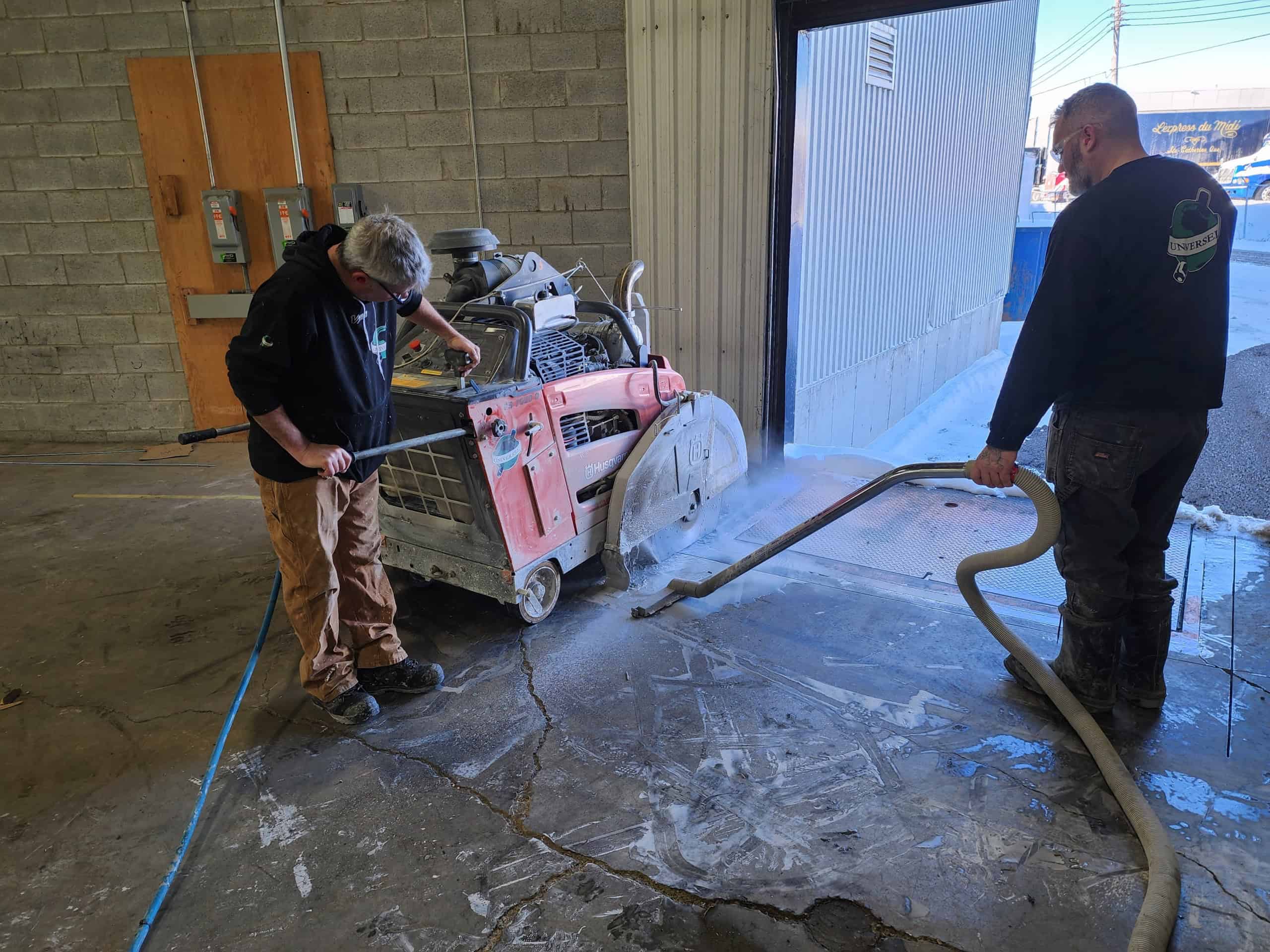
Joint planning deserves serious attention too. Control joints aren’t just lines cut into concrete; they guide cracking. Poorly spaced or improperly timed cuts lead to random cracking, which is both unsightly and structurally problematic. I’ve personally walked sites where contractors waited too long to saw-cut joints, and hairline cracks appeared overnight. Timing is everything, especially in Montreal’s fluctuating temperatures.
If I give one piece of advice to anyone investing in an industrial slab here, it’s this: prioritize preparation and engineering over speed. Industrial concrete is not forgiving. Soil testing, drainage design, reinforcement planning, and curing practices all need to align. The slab may look simple when it’s finished, but what lies beneath determines whether it performs for decades or starts failing within a few winters.
After years in this field, I’ve come to respect the complexity of what many assume is just “a concrete floor.” In Montreal’s climate, an industrial slab is a structural system in its own right. Build it carefully, and it will quietly support your operation for years. Rush it, and it will remind you of that decision every single da.
https://share.google/58hFmFk3TLOK3CXnD